
 Image 1 of 2
 Image 2 of 2
Keturah: The Sweet Tikkun (an exclusive incense blend)
Across the African continent—especially among Bantu-speaking peoples—the use of incense, aromatics, and sacred smoke has long been recognized as a central pillar of spiritual life, healing, purification, and woman-centered sanctity. This custom is not peripheral; it is foundational, woven into everyday domestic rhythms and high ritual alike. Within a Bantu Israelite perspective, this ancient African practice reflects a deep spiritual intuition that resonates strongly with the Sod (esoteric, “Kabbalistic” meaning) of the Ketoret, the sacred incense of the Mishkahn/Beit haMikdash.
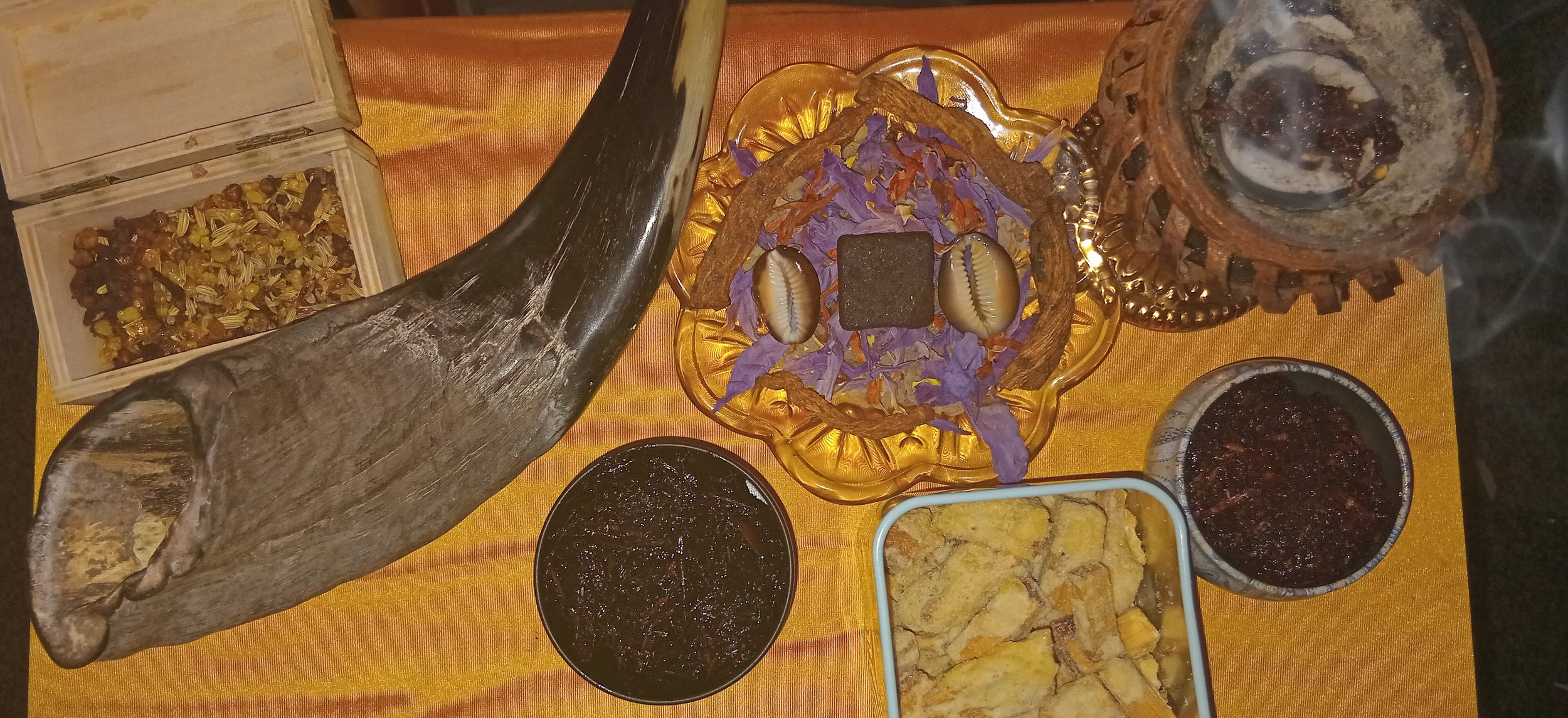
Traditional African incense (such as Senegalese thiouraye, Nigerian Turaren Wuta, Moroccan Bakhoor and the like) commonly uses:
Frankincense
Myrrh
Resin “tears” of Boswellia and Commiphora species
Onycha shell from African freshwater mollusks
Copal, gum Arabic, and sweet grasses
Several of these are exactly the same as the ingredients of the Biblical Ketoret.
From a Bantu Israelite viewpoint, this parallel is not accidental—it suggests a shared ancient fragrance culture, rooted in East African trade routes and spiritual patterns reaching back thousands of years.
From a Kabbalistic perspective, rooted in the wisdom of Ari HaKadosh, incense transforms severity into sweetness. So too, African wives and mothers traditionally “sweetened the house” after illness, arguments, or impurity. Likewise, the Ketoret lifts feminine waters (Mayim Nukvin) upward. Thus, African incense burning is traditionally tied to women’s healing cycles—post-menstrual resoration, postpartum purification, or sactifying satisfying marital relations. In Lurianic language, incense “pulls” the Shekhinah back into the dwelling place. This mirrors the African intuition that a sweet-smelling home invites blessing, ancestors, and harmony.
Thus, African women—historically the ones to grind the spices & resins, blending the herb-infused oils & perfumes for the incense—become priestesses of the home, echoing the Temple service in everyday acts, reflecting the unifying & perfuming of HaKelim, and becoming living embodiments of the mystical secret of the Shekhinah as: “Mevaseret ha-Re’ach—She Who Brings Forth Fragrance.”
From a Bantu Israelite lens, this practice is a quiet continuation of the ancient work of the Ketoret—transforming the home into a protected sanctuary where peace, light, and sweetness can rest.
The combined spiritual effects of this tradition are:
Purification of stagnant or negative energies
Elevation of consciousness and inner calm
Sweetening of harsh or heavy emotional states
Sanctification of the living space
Strengthening of the feminine soul (Nukva)
Inviting Divine & ancestral presence and blessing
Healing of the womb, family, and lineage
In this way, African incense customs express an unbroken intuition:
where there is fragrance, warmth, and purity, the Divine draws near.
The Zohar reveals:
"בְּקְטֹרֶת מִתְמַתְּקִין דִּינִין"
“With the incense, the judgments are sweetened.”
— Zohar Vayakhel 218b
Likewise, Torah says:
"וְכִסָּה עֲנַן הַקְּטֹרֶת… וְלֹא יָמוּת"
“And the cloud of incense shall cover… and he shall not die.”
— Shemot/Exodus 30:38
So too the Bantu women would say:
“Smoke the house, and misfortune passes over.”
They did not learn it from parchment,
but from spirit and memory,
the same memory that taught the priest
to mix frankincense and myrrh,
just as African women ground the same resins
between stone and palm.
"לֹא נִתְפַּיֵּס הַקָּדוֹשׁ בָּרוּךְ הוּא עִם יִשְׂרָאֵל
אֶלָּא בְּרֵיחַ הַקְּטֹרֶת."
“The Holy One was not reconciled with Israel
except through the fragrance of the incense.”
— Bamidbar Rabbah 12:4
"הַקְּטֹרֶת מַעֲלָה מַיִין נוּקְבִין
וּמְמַתֶּקֶת הַדִּינִים בְּשֹׁרֶשׁ הַנּוּקְבָא."
“The Ketoret elevates the feminine waters
and sweetens the judgments in the root of the feminine.”
— Etz Chaim, Sha’ar HaKetoret
African women have always done this—
lifting the home, sweetening the atmosphere,
turning heaviness into harmony.
When the new mother was in pain, they wrapped her in linens and smoked her Sacred Space with sacred resins; when a girl became a woman, they painted her feet with henna & perfumed her path with Oudh & Musks; when the home felt heavy with unseen troubles, a wife would sweep with a new broom then scatter cinnamon & sweet leaves over the coals and say, “Let the house breathe again.”
"סוּלָּם דְּנָשִׁין הוּא הַקְּטֹרֶת."
“The incense is the ladder of the women (the feminine).”
— Zohar II: 244a (Idra Rabba)
This is not about gender alone—
It is about the Nukvah, the feminine presence,
the Shekhinah,
the wounded soul of the world.
When African women burned incense after childbirth, after menstruation, after sorrow, they raised themselves and their homes through an instinctive arousal of Mayim Nukvin, the feminine waters rising.
The Ari says:
"עֲלִיַּת הַמַּלְכוּת
הוּא סוֹד קְטֹרֶת שֶׁמַּעֲלֶה מִתַּתָּא לְעֵילָא."
“The ascent of Malkhut
is the secret of the incense
which rises from below to above.”
— Sha’ar HaKavanot, Inyan Ketoret
This is the spiritual labor African women carried, generation to generation, lifting, softening, elevating, restoring, a priesthood of the hearth, a temple in the home.
Across the African continent—especially among Bantu-speaking peoples—the use of incense, aromatics, and sacred smoke has long been recognized as a central pillar of spiritual life, healing, purification, and woman-centered sanctity. This custom is not peripheral; it is foundational, woven into everyday domestic rhythms and high ritual alike. Within a Bantu Israelite perspective, this ancient African practice reflects a deep spiritual intuition that resonates strongly with the Sod (esoteric, “Kabbalistic” meaning) of the Ketoret, the sacred incense of the Mishkahn/Beit haMikdash.
Traditional African incense (such as Senegalese thiouraye, Nigerian Turaren Wuta, Moroccan Bakhoor and the like) commonly uses:
Frankincense
Myrrh
Resin “tears” of Boswellia and Commiphora species
Onycha shell from African freshwater mollusks
Copal, gum Arabic, and sweet grasses
Several of these are exactly the same as the ingredients of the Biblical Ketoret.
From a Bantu Israelite viewpoint, this parallel is not accidental—it suggests a shared ancient fragrance culture, rooted in East African trade routes and spiritual patterns reaching back thousands of years.
From a Kabbalistic perspective, rooted in the wisdom of Ari HaKadosh, incense transforms severity into sweetness. So too, African wives and mothers traditionally “sweetened the house” after illness, arguments, or impurity. Likewise, the Ketoret lifts feminine waters (Mayim Nukvin) upward. Thus, African incense burning is traditionally tied to women’s healing cycles—post-menstrual resoration, postpartum purification, or sactifying satisfying marital relations. In Lurianic language, incense “pulls” the Shekhinah back into the dwelling place. This mirrors the African intuition that a sweet-smelling home invites blessing, ancestors, and harmony.
Thus, African women—historically the ones to grind the spices & resins, blending the herb-infused oils & perfumes for the incense—become priestesses of the home, echoing the Temple service in everyday acts, reflecting the unifying & perfuming of HaKelim, and becoming living embodiments of the mystical secret of the Shekhinah as: “Mevaseret ha-Re’ach—She Who Brings Forth Fragrance.”
From a Bantu Israelite lens, this practice is a quiet continuation of the ancient work of the Ketoret—transforming the home into a protected sanctuary where peace, light, and sweetness can rest.
The combined spiritual effects of this tradition are:
Purification of stagnant or negative energies
Elevation of consciousness and inner calm
Sweetening of harsh or heavy emotional states
Sanctification of the living space
Strengthening of the feminine soul (Nukva)
Inviting Divine & ancestral presence and blessing
Healing of the womb, family, and lineage
In this way, African incense customs express an unbroken intuition:
where there is fragrance, warmth, and purity, the Divine draws near.
The Zohar reveals:
"בְּקְטֹרֶת מִתְמַתְּקִין דִּינִין"
“With the incense, the judgments are sweetened.”
— Zohar Vayakhel 218b
Likewise, Torah says:
"וְכִסָּה עֲנַן הַקְּטֹרֶת… וְלֹא יָמוּת"
“And the cloud of incense shall cover… and he shall not die.”
— Shemot/Exodus 30:38
So too the Bantu women would say:
“Smoke the house, and misfortune passes over.”
They did not learn it from parchment,
but from spirit and memory,
the same memory that taught the priest
to mix frankincense and myrrh,
just as African women ground the same resins
between stone and palm.
"לֹא נִתְפַּיֵּס הַקָּדוֹשׁ בָּרוּךְ הוּא עִם יִשְׂרָאֵל
אֶלָּא בְּרֵיחַ הַקְּטֹרֶת."
“The Holy One was not reconciled with Israel
except through the fragrance of the incense.”
— Bamidbar Rabbah 12:4
"הַקְּטֹרֶת מַעֲלָה מַיִין נוּקְבִין
וּמְמַתֶּקֶת הַדִּינִים בְּשֹׁרֶשׁ הַנּוּקְבָא."
“The Ketoret elevates the feminine waters
and sweetens the judgments in the root of the feminine.”
— Etz Chaim, Sha’ar HaKetoret
African women have always done this—
lifting the home, sweetening the atmosphere,
turning heaviness into harmony.
When the new mother was in pain, they wrapped her in linens and smoked her Sacred Space with sacred resins; when a girl became a woman, they painted her feet with henna & perfumed her path with Oudh & Musks; when the home felt heavy with unseen troubles, a wife would sweep with a new broom then scatter cinnamon & sweet leaves over the coals and say, “Let the house breathe again.”
"סוּלָּם דְּנָשִׁין הוּא הַקְּטֹרֶת."
“The incense is the ladder of the women (the feminine).”
— Zohar II: 244a (Idra Rabba)
This is not about gender alone—
It is about the Nukvah, the feminine presence,
the Shekhinah,
the wounded soul of the world.
When African women burned incense after childbirth, after menstruation, after sorrow, they raised themselves and their homes through an instinctive arousal of Mayim Nukvin, the feminine waters rising.
The Ari says:
"עֲלִיַּת הַמַּלְכוּת
הוּא סוֹד קְטֹרֶת שֶׁמַּעֲלֶה מִתַּתָּא לְעֵילָא."
“The ascent of Malkhut
is the secret of the incense
which rises from below to above.”
— Sha’ar HaKavanot, Inyan Ketoret
This is the spiritual labor African women carried, generation to generation, lifting, softening, elevating, restoring, a priesthood of the hearth, a temple in the home.