
Redefining the World
Our spiritual values must take part in shaping society, fostering a global order grounded in wisdom.
Think Tank Alef — Strategic Thought of the Chief Rabbinate of Africa
Think Tank Alef is the strategic ideas and policy institute of the Chief Rabbinate of Africa, founded and led by Chief Rabbi Pinhas Eliyahou Shaday — PhD candidate in the Human Sciences, Chief Rabbi for Sub‑Saharan Africa, founder of the Botsina Kadisha religious institutes in Israel, author, and former presidential candidate in the Democratic Republic of Congo. A committed thinker and visionary, Rabbi Shaday’s work advances the rehabilitation of Afro‑Israelite thought and its rightful place in the global conversation of civilizations. His books — including The Black Book of the Second Independences, Political Tribalism, and Rethinking the Nsele Manifesto — center Africa, its spirituality, and its ancestral values within a bold, original reflection on today’s continental and global challenges.
A Convergence of Knowledge and Wisdom
Think Tank Alef unites scientific research, Torah‑rooted wisdom, and contemporary strategic analysis. In a world where political, economic, environmental, and ethical issues intertwine, our paradigms must be reimagined. Think tanks have become indispensable sources of expertise to inform public policy and societal development. Yet too often, these reflections remain locked within purely technocratic models, devoid of spiritual depth. Think Tank Alef breaks that mold. We draw insight and solutions from the depths of Torah Alef — the primordial wisdom transmitted by the Sages of the East (Mizrah) and the Israelite traditions of Africa. Our mission is to reveal hidden solutions within sacred texts — spiritual and conceptual keys for a more just, balanced, and livable world.
An Afro‑Israelite Intelligence Platform
Bringing together scholars, rabbanim, economists, jurists, public‑policy experts, and development practitioners, Think Tank Alef explores: public governance, ethical leadership, economic justice, environmental spirituality, interfaith dialogue, cultural diplomacy, and African geopolitics. This research platform highlights the conceptual treasures of Afro‑Hebraic thought — a worldview that harmonizes humanism with transcendence, knowledge with morality, and freedom with responsibility. Think Tank Alef offers Africa and the world a new frame of reference in which Torah wisdom speaks to science, policy, and culture — to foster a shared life marked by dignity, equity, and spiritual grounding.
Toward a New Moral and Spiritual World Order
Amid ideological fragmentation and the loss of common bearings, Think Tank Alef proposes a renewal of human and political values rooted in the knowledge of Divine Oneness (Alef). This approach re‑centers Africa — cradle of the earliest covenants between humankind and the Creator — within a New World Order of values, not built on domination, but on consciousness, justice, and shared dignity. Through study circles, convenings, and publications, Think Tank Alef aims to secure for Africa its deserving place in the diplomacy of ideas and the spiritual geopolitics of the 21st century.
Think Tank Alef — Where Ancestral Wisdom Meets Contemporary Strategy.
“Where science interrogates the world, Torah Alef reveals its meaning.” — Chief Rabbi Pinhas Eliyahou Shaday
Vision Statement
We harness the hidden solutions of Torah Alef to inform policy, elevate public life, and re‑center Bantu‑Israelite wisdom in global decision‑making — advancing a just, spiritually grounded world where Africa’s voice shapes the future with clarity, courage, and compassion
Crossroads of Wisdom
Here begins a journey.
A circle where the paths of the Torah, Bantu wisdoms, and ancestral traditions meet, recognize one another, and enter into dialogue. Welcome to the Crossroads of Wisdom, a place of covenant between the visible and invisible worlds, between the memory of the elders and the spiritual quest of the modern being.
The world is in need—not only of opinions—but of roots and meaning.
Here, we honor the living word, that which is transmitted from mouth to ear, from Masters to disciples, from elders to children. We give voice again to orality, to the depth of symbol, to the hidden light — the Ohr HaGanuz, the primordial Wisdom.
Each encounter, each exchange, is a crossing.
We explore mysticism, sacred science, and the knowledge of the texts — but also the African rites and cosmologies that remind us that the human being is, above all, a reflection of the Divine. Neither dogma nor proselytism — but an honest discourse, rooted in respect, embarking together on a luminous search. Here, at the Crossroads of Wisdom, under the guidance of Chief Rabbi Pinhas Eliyahou, the Torah speaks with the Dikenga, the Israelite light illumines the heart of Kongo Katiopa (Africa), and the voice of the prophets answers that of the ancestors. We speak of the hidden unity behind all diversity, of the divine breath that animates every form, of the wisdom that passes through gestures, symbols, and silences.
Join us — to listen, to share, to question. Every video is an invitation to reflection; every exchange, an act of repair and awakening.
Carrefour de Sagesses — where the ancient light illuminates the world to come.
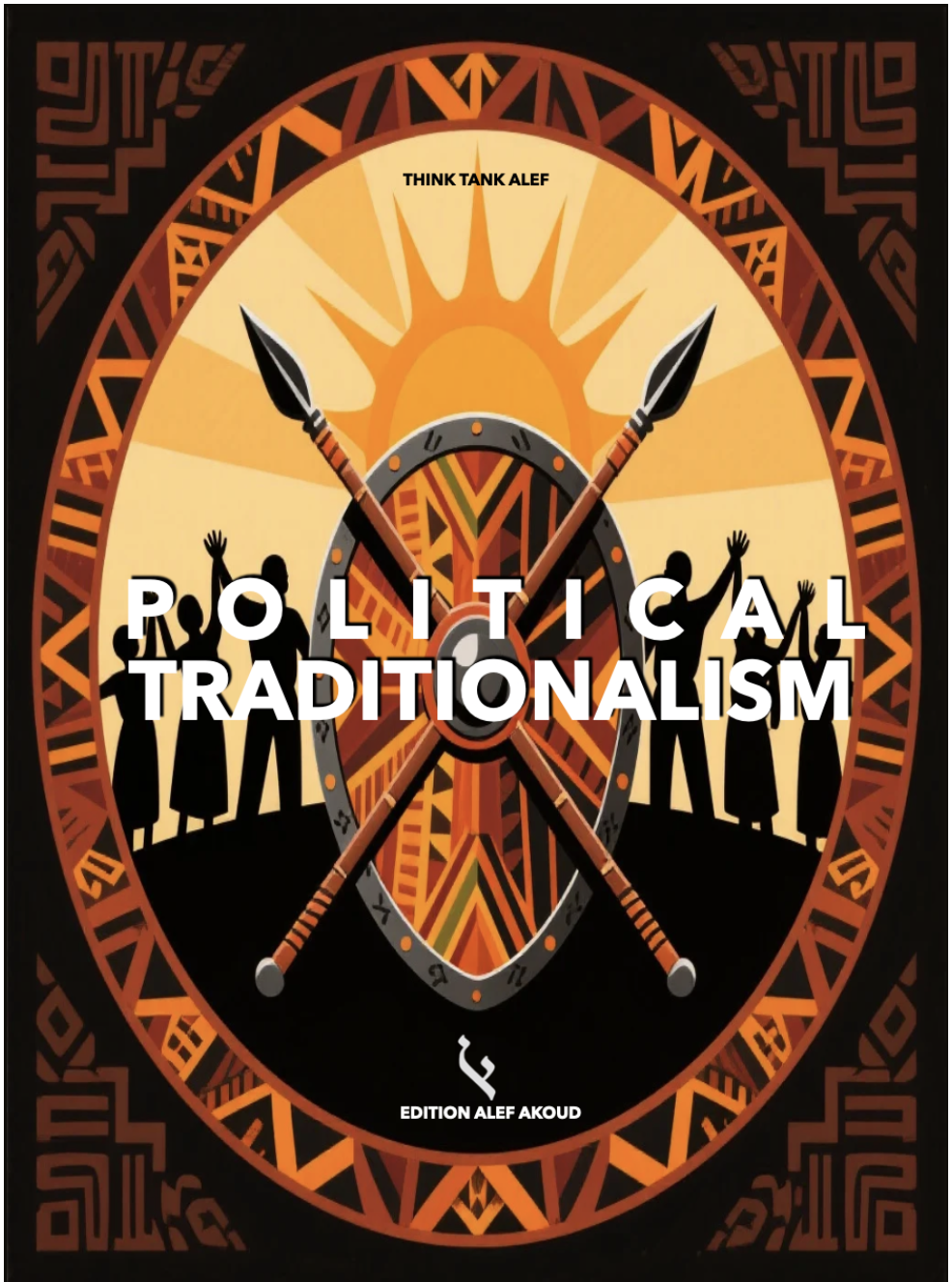
Political Traditionalism
What if Africa regained its sovereignty by reconnecting with its traditions?
This book invites the international community and the Western world to rethink history, drawing lessons from the invasion of the Kingdom of Kongo in 1480. The result of deep reflection and analysis of recent transitions on the continent, “Political Traditionalism” puts forward a bold vision: to place African values and identities at the heart of governance, in order to build an autonomous, stable, and prosperous society.
Through an innovative political, economic, and social program, the author—the Chief Rabbi of Africa & and Founder of the Political Movement “IMPERIUM” in DR Congo—calls for a second independence, founded on truth, justice, tradition, and dignity. This manifesto, carried by the strength of the Bantu people and the wisdom of the ancestors, offers an alternative to imported models and proposes concrete solutions for the continent’s future. It is a powerful call for unity, reconciliation, and African renaissance.