
Birth Pangs: Parshat Toldot & The Labor of Holiness
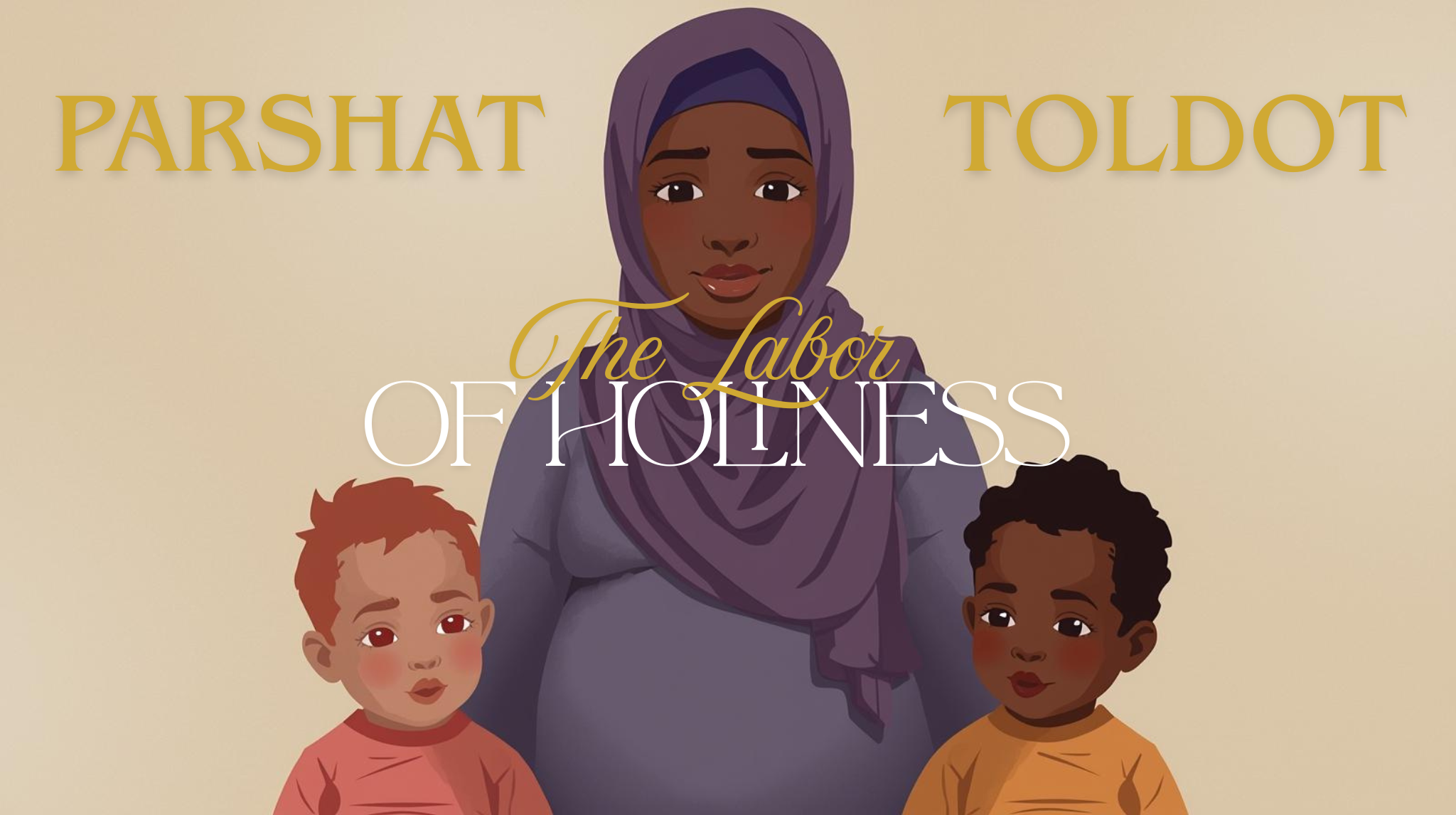
Parshat Toldot is a story of stories. Toldot itself is commonly translated as “generations,” however, could just as well be translated as “births,” hence, the clear etymological link between Toldot and Yulad, Molad, and Yuledet. Intriguingly, Molad refers to the birth of the Moon and the new month; thus, the yearly reading of Toldot arrives on the cusp of Rosh Chodesh Kislev. Yulad means ”was born,” and Yuledet means “birth”: thus, Toldot is a story of births. Most typically associate the concept of lineage , legacy, inheritance, and generations with patriarchal legality and nationality– after all, the man “generates” the seed and the Shefa of parnasa that ensures wealth as an inheritance to pass down from father to son. While this association is most common, however, the nuance between connotations corresponding to generations and births deserve quite sensitive attention.
Toldot is a Parsha in which our matriarch Rebekah is firmly rooted– and likewise the Parsha where her soul roots are the most significant and crucial for the proper appreciation of her noble heritage and purpose in the grand Tikkun regarding our identity and our ancestry. When we meet Rebekah in Parsha Chayei Sarah, she introduces herself to Abraham’s servant, Eliezar, as “daughter of Bethuel, son of Milchah, whom she bore to Nahor” Milchah, in contrast to Nahor’s concubine Reumah, is the mother of Rebekah’s father Bethuel. This establishes Rebekah’s legitimacy as the daughter of a true wife, not a secondary one. A further elevation of her lineage is due to Milchah’s proximity to Sarah as sisters: both are the daughters of Haran, who is the brother of Abraham. Abraham and Nahor are both sons of Terach and Amtalai; Amtalai was forced and defiled by Terach during her Niddah, a transgression which was rectified by Amtalai reincarnating as the gilgul Dinah, who was the vessel and catalyst for sweetening dinim through her encounter with Shechem, rectifying Yesod through the atoning bloodshed of Brit Milah (circumcision) and the vengeance enacted by Simeon and Levi.
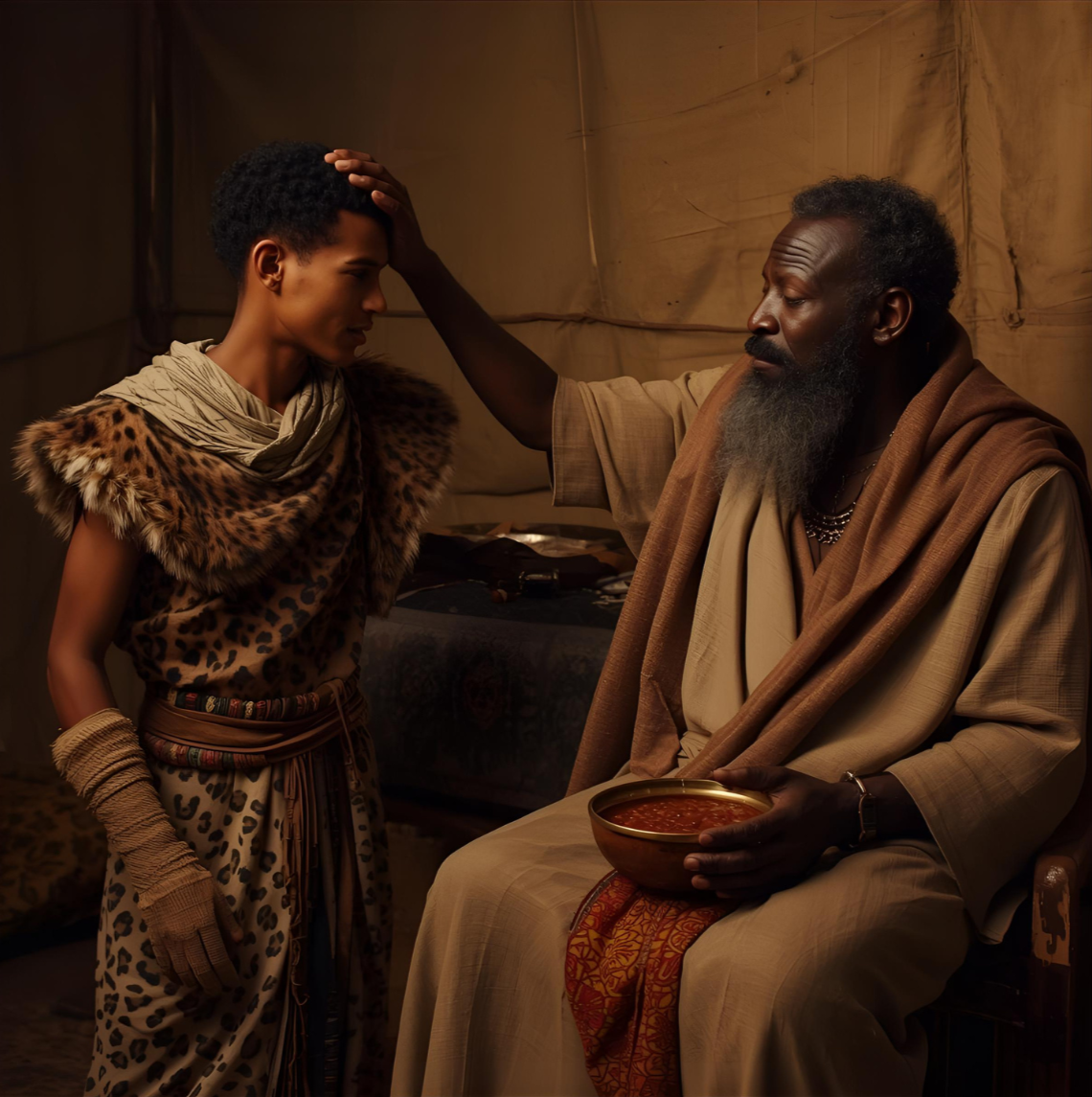
Sarah and Milcah are both the sisters of Lot, all 3 sharing Haran as their father. An amazing secret is revealed in the very names of these sisters: Midrash reveals Sarah’s name is also Iscah which means “to see,” confirmed in Sarah’s extraordinary gift of prophecy. Sages attest that Sarah’s gift of prophecy was superior to Abraham’s which is why Abraham was told by HaShem to heed Sarah in all she told him. Significantly, he was specifically told this in direct juxtaposition to the pasukim concerning Ishmael’s mistreatment of Yitzhaac. Sarah sending Ishmael away with his mother was not a matter of jealousy, rather, indicative of her ability to safeguard the true lineage of Covenant, securing Yitzhak’s state as Abraham’s only son (וַיֹּ֡אמֶר קַח־נָ֠א אֶת־בִּנְךָ֨ אֶת־יְחִֽידְךָ֤ אֲשֶׁר־אָהַ֙בְתָּ֙ אֶת־יִצְחָ֔ק וְלֶ֨ךְ־לְךָ֔ Bereshit/Genesis 22:2). Similarly, Rebekah, blessed with the strong gift of prophecy, arranged for Yaacob to receive Esau's blessing by disguising him, securing the legitimacy of the holy lineage, knowing the future implications of setting the stage for a grandiose tikkun.
Milcah, mother of Bethuel, bears a name that echoes Malkah and Malaka. The duality of this name also contains the secret of Rebekah’s spiritual strength and merit from her noble maternal lineage. Malkah signifies royalty, authority, rulership, sovereignty, and, most poignantly, Sefira Malkhut, the Divine Feminine Nukvah, the final He of the Tetragrammaton, the Field (Sadeh שדה) and the Cosmos (Challal חלל). Malaka denotes work– in contrast to the “work” associated with Avodah, the work defined as Malaka is that which requires physical, embodied labor. This labor hinted in Milchah’s name is poetically profound, as Milchah’s line will eventually produce, through Yehudah, Betzalel, the builder of the Mishkahn, renowned for his artistry inspired by the Ruach Elohim. As Malkah specifically denotes labor that is creative and sensorial, such as writing, cooking, planting, sewing, etc. Indeed, the sensually creative “labor” and artistry of women is the birth of life, the alchemy that ensures growth, progress, fruitful multiplication. While Ari HaKadsh reveals to us Rebekah’s root is Gevurah, Milcha is identified with Chesed, a balance to the Gevurah root of her husband Nahor, whose name means “snorting” or “panting” which paints a vivid imagery of “snorting” in derision during judgement or “panting” while running from judgements. Bethuel represents the harmony of the moderation of these two forces as Milchah and Nahor’s son, the father of Rebekah, who inherits Milchah’s Chesed through her hospitality in serving Eliezar and his camels– a perfect alignment for the son of Abraham, himself the very embodiment of Sefira Chesed, Master of hospitality.
Thus, Toldot begins with the story of Yitzhak, who, enigmatically, is called בן אַרְבָּעִים שָׁנָהבן “Ben-Arbayim Shanah.” This signification is literally translated as “Son of 40 years” or “Son of the 40 Year.” Tantalisingly, another Mystery is cloaked in the hint that the phrase also means ”Between the Evenings” or “Between Two Evenings,” alluding to the time of dusk, where day seems to melt into night– a delicate Yichud of Yom disappearing back into the warm womb of לַיְלָה Layla, of Ohr into חושך Chosheck. Thus, it is a crucible in which what was once separated becomes reconciled, reunified, as the illusion of difference & division dissolves in Torah Emet, Torah Alef, Torah Yosef….

In Etz Chaim, Ari haKadosh reveals that “Yom arbayim” is the day of a new formation, alluding to the partzufim. Interestingly, 40 days conception is the exact time it takes for a soul to be fully settled into a fetus– prior to the 40th day, a fetus is not considered viable. 40 days fasting, indeed, is Divine Formation (Yetzirah): intense kavanot of Tikkun haMiddot (Character Rectification) during the humbling process of egoic renunciation of fleshy & material desires certainly shapes and forms one into a proverbial “new creature,” a new manifestation of an elevated self. 40 Years in the wilderness abjectly humbled Am Israel, purified by trial, allowing the Nation to be formed (Le’yetzer) to a new, elevated manifestation after the impure souls died off, like dross melting away from pure gold in a crucible.
Indeed, the crucible is the womb of Rebekah, in which were 2 souls, pure separated from impure like the centrifuge of the alchemists, and like the sifting sieve of the grain harvesters. In the womb, one is formed (notzer) for 40 weeks. 40 is the gematria of the letter mem, the embodiment of water, מים mayim. The womb waters are those in which we are formed for 40 weeks: Torah herself is called “living waters,” identified with Mother’s wisdom in Mishle/Proverbs chapter 6, included in the weekly Chok Le’Yisrael readings of Parshat Veyetzei. Binah is associated with Understanding and the process of gestation & expansion in the womb. Just as waters (chesed) sweeten the gevurah of the wine of Kiddush, Rebekah’s chesed inherited from Milchah sweetens the Gevurah of Yitzhak and their marriage is one of harmony (tiferet) that births Yaacob, who is the living embodiment of Sefirah Tiferet. In Bereshit Rabbah 57:1, the Sages note that the age of 40 is the age of the maturity of Elevated Consciousness, Mohin Gadol, the time of complete Mastery and inheritance of da’at sheleimah (complete knowing). Our Sages– and the wisdom of the Bantu Israelites– confirms that a man is not a full man until marriage, when his tzela is restored– his tzel, Shadow, as his Achor, the other side– and, as man and wife, embodying the Tzelem of Hashem, the Vav and He completed in Yichud, the Zeir Anpin and Nukvah reconciled, HaKadosh Baruch Hu and Shekinah rectified, the Divine Name as the Olamot reunified.
We see the story of Yitzhak, then, is truly the story of the generation(s)-- and re-generation– of Yitzhak as the story of the birth of Rebekah, the womb that serves as the alchemical crucible in which Gevurot is sweetened by Chesed, and seeming polarities are reconciled in the Divine Unity of Torah Emet, the Torah Alef, the Torah of Yosef, our inheritance.
Original Intellectual Property
Written by Gloria Steele/Chauah Hadassah Hadara
2:11pm est Rosh Chodesh Kislev/ Saturday, November 22, 2025
